
Overview
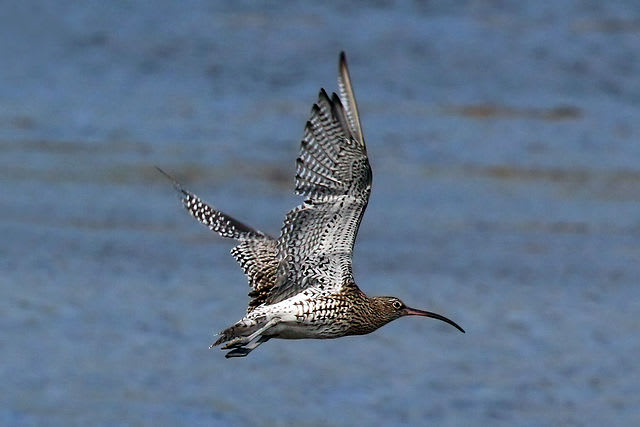
This is the largest wader in its range. It is mainly greyish brown, with a white back, greyish-blue legs and a very long curved bill. Males and females look identical, but the bill is longest in the adult female. It is generally not possible to recognize the sex of a single Eurasian curlew, or even several ones, as there is much variation; telling male and female of a mated pair apart is usually possible however.
Taxonomy
- Kingdom
- Animalia
- Phylum
- Chordata
- Class
- Bird
- Family
- Charadriidae
- Genus
- Numenius
- Species
- arquata
Habitat
Taiga, meadow, and similar habitats.
Diet
Small invertebrates, but will also pick small crabs and earthworms off the surface if the opportunity arises.
Behavior
The nest is a bare scrape. Each curlew lays between 3 and 6 eggs in April or May and incubates them for about a month until they begin to hatch. The familiar call is a loud curloo-oo. It is generally wary. Highly gregarious outside the breeding season, the Eurasian curlew feeds by probing soft mud.
Hunting
More information is needed.
Conservation Status
Listed as Near Threatened by IUCN.